
US
Voyager 1 becomes the first spacecraft ever to reach one light-day from Earth
Nearly 50 years after launch, Voyager 1 crossed 16.1 billion miles early Wednesday, so a radio signal from Earth now takes a full day to reach it.
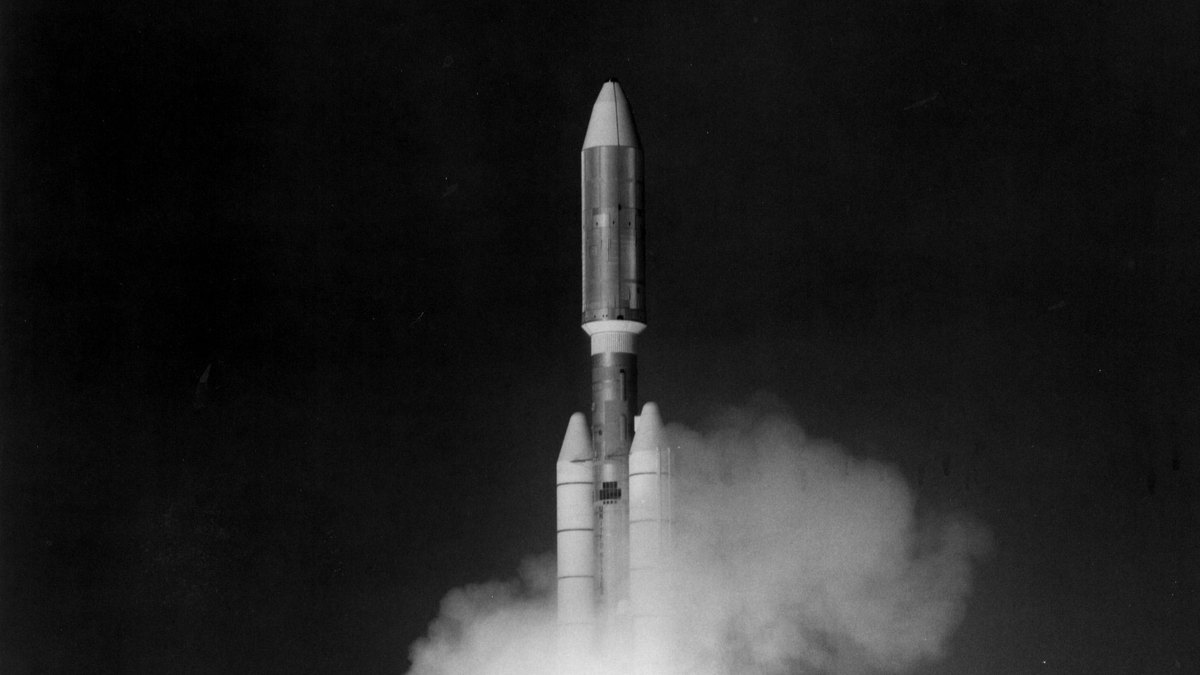
Before most of America woke up on Wednesday, a spacecraft built in the 1970s quietly crossed a line nothing made by people had ever crossed. At 4:16 a.m. Central, Voyager 1 reached a full light-day from Earth. That means a radio message sent from home now needs an entire 24 hours to catch up with it.
A light-day is a measure of distance rather than time. It works out to roughly 16.1 billion miles, or about 173 times the gap between Earth and the Sun. For comparison, light from the Moon reaches us in about a second and a third while sunlight takes a little over eight minutes. Any question engineers send to Voyager 1 today will need a day to arrive and the reply will need another day to come back.
The probe lifted off from Florida on Sept. 5, 1977, two weeks after its twin, Voyager 2. It flew past Jupiter and Saturn, sent home close-up views of their moons and then bent away from the planets in 1980. Ten years later it turned its camera around to snap the famous Pale Blue Dot picture of Earth as a speck in a sunbeam. In 2012 it became the first spacecraft to leave the bubble of solar wind around the Sun and enter interstellar space.
Getting this far took 49 years, two months and 11 days even though the craft is still moving at close to 38,000 mph. That speed sounds enormous but it is a crawl next to light. Voyager 1 is drifting toward a dim star in the Little Dipper and is expected to pass within about 1.7 light-years of it some 40,000 years from now.
The space agency asked people around the world to mark the moment by flashing phones, flashlights and even building lights skyward after sunset on Tuesday night as a symbolic hello to the craft. Voyager 2 is moving more slowly on a different path and should reach its own light-day mark in November 2035.
Both probes still send science back from a region no other machine has explored, though they are running on fading nuclear power and the team has shut down heaters and instruments one by one to keep them alive. Each one also carries a golden record packed with sounds, music and images from Earth in case anyone out there ever finds it.
More like this
NASA's Perseverance finds ultrafine Mars dust that could threaten astronauts' lungs
SpaceX catches its Starship spacecraft with giant tower arms for the first time after a day in orbit

Victor Glover and the Artemis II crew win the nation's top spaceflight honor
SpaceX Dragon docks at the space station with science gear and the last roll-out solar arrays