
US
SpaceX catches its Starship spacecraft with giant tower arms for the first time after a day in orbit
The ship circled Earth 14 times then flipped upright into the launch tower's arms in Texas. The booster did not make it back and blew up over the Gulf.
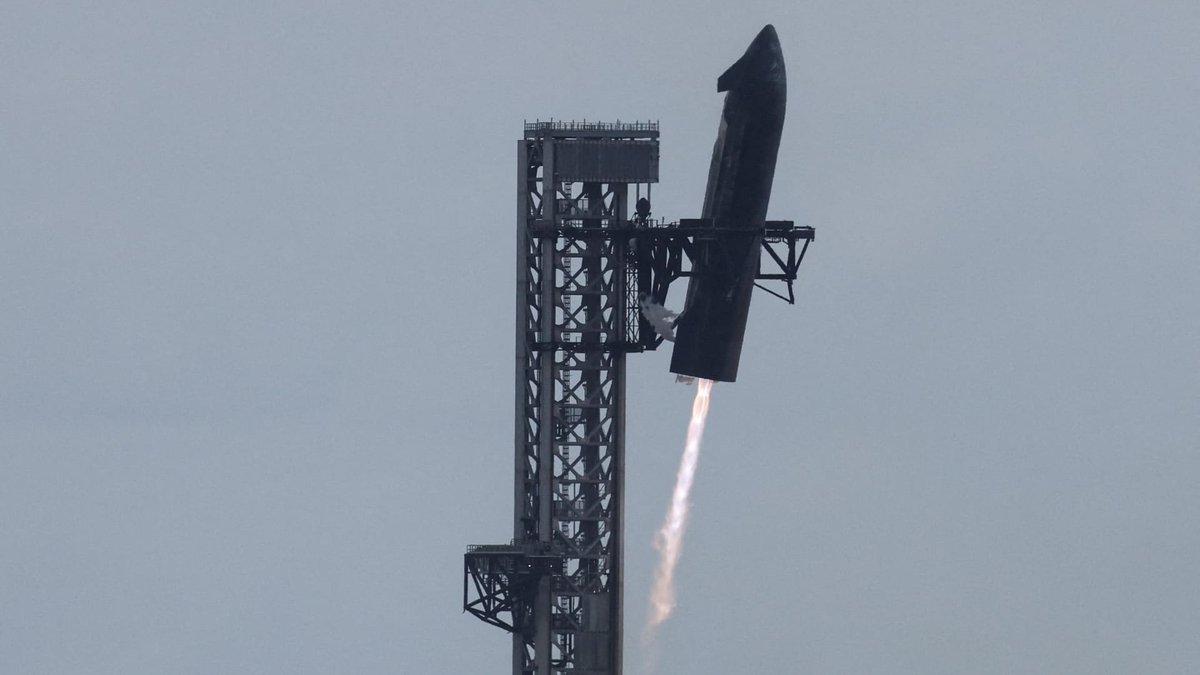
SpaceX pulled off a feat no one had done before on Saturday afternoon. Its Starship spacecraft came screaming back from orbit, dropped through the clouds over South Texas, flipped itself upright and eased into the waiting arms of the launch tower that sent it up.
The capture happened at about 3:20 p.m. Central at Starbase, the company's rocket site near the southern tip of Texas. It came roughly 22 and a half hours after liftoff. The company has grabbed its giant first-stage boosters out of the air before, but this was the first time it snagged the upper stage, the part that actually travels to space.
That matters because the whole point of Starship is to be flown again and again like an airliner. Catching the ship on the tower means it does not have to be fished out of the ocean or built from scratch for the next mission. Founder Elon Musk later shared video of himself looking over the returned spacecraft.
The day was not a clean sweep. The flight was the first attempt to bring both pieces of the rocket home on the same mission. Shortly after launch Friday evening, the Super Heavy booster's computers decided it was out of position for a catch and called off the landing. The booster turned toward an emergency splashdown in the Gulf and exploded before or just as it hit the water. Engineers are still working out how it drifted off course. The company said crews are recovering any debris that washes ashore.
The ship kept going. It reached orbit about 171 miles up and released 26 of the company's newest Starlink internet satellites. Then it spent most of a day looping the planet, 14 trips around in all, while ground teams checked its heat shield, flaps and guidance before giving the go to come home.
Friday's launch also rippled into air travel. Hawaii briefly paused some West Coast flights because of possible falling debris, separate from the nationwide ground stop caused by the air traffic network failure that same afternoon.
The stakes reach well beyond Texas. NASA is counting on a version of Starship to ferry astronauts between lunar orbit and the surface of the moon. The company also needs the rocket to haul bigger batches of satellites for its internet service, which already has more than 11,000 spacecraft overhead. Launch pads in Florida are being readied so Starship can fly from the Space Coast as well.
For now the program has a picture it has chased for years. A spacecraft that went around the world came back and parked itself in the arms of a steel tower, ready to be checked over and possibly flown again.
More like this
Elon Musk says he will give a SpaceX share to every child in America next year
SpaceX Dragon docks at the space station with science gear and the last roll-out solar arrays

Tesla will wind down Cybertruck production in Texas by mid-2027

Elon Musk is lucky to live in Texas and should stay off its beaches, Gina Hinojosa says