
US
The Vulcan rocket fails minutes after liftoff in Florida and takes 40 Amazon internet satellites down with it
The Boeing-Lockheed rocket broke down 10 minutes into its first flight in nine months, its maker's first total failure in 20 years and a blow to Amazon Leo.
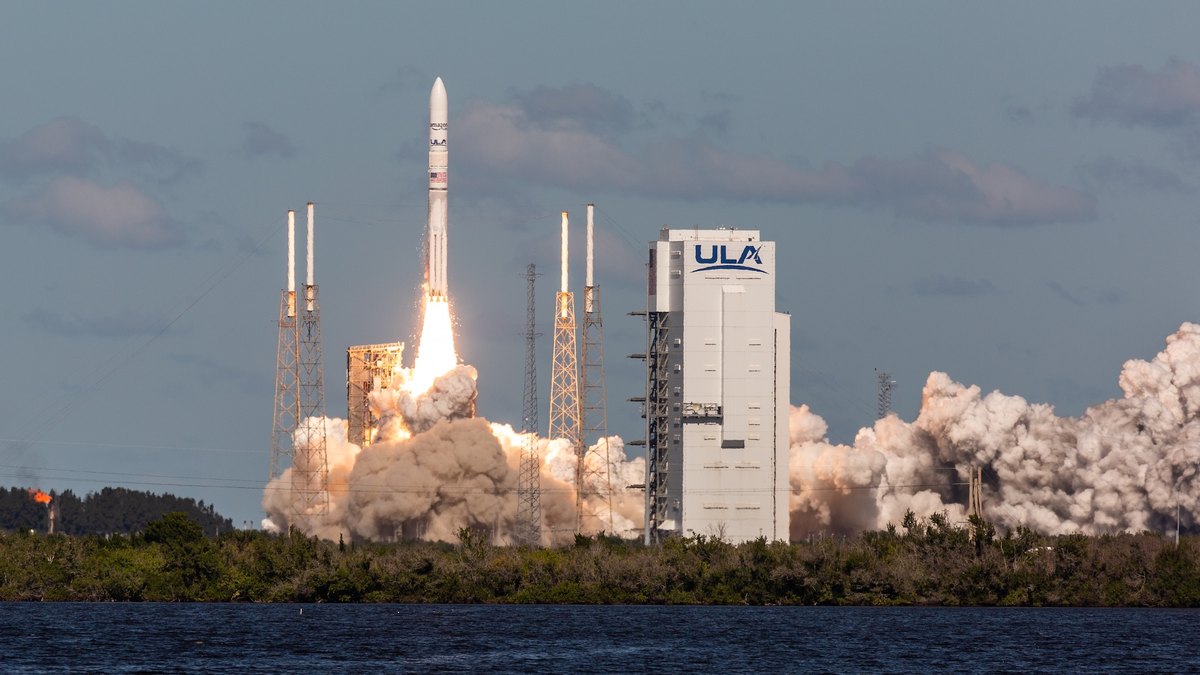
A brand-new heavy rocket built to carry America's spy satellites and a fleet of Amazon internet craft broke down on its way to orbit Sunday. All 40 satellites on board were lost. It was the first time United Launch Alliance has ever failed to finish a mission since Boeing and Lockheed Martin teamed up to form the company in 2006.
The Vulcan rocket roared off its pad at Cape Canaveral Space Force Station in Florida at 11:40 a.m. Central after a countdown that had already been halted 20 seconds before ignition. Its six strap-on boosters did their job and peeled away in under two minutes. Then something went wrong. About 10 minutes into the climb the company told the world the flight had suffered an anomaly and the payload never reached space.
Nobody has said yet what broke. Early accounts differ on whether the trouble started in the main booster stage or in the Centaur upper stage that was supposed to fire for more than 12 minutes. The launch had already been pushed back twice this weekend, once on Friday when a nitrogen plant that serves several rocket companies went down and again on Saturday because of a network glitch between the rocket and ground systems.
"Today, we did not meet that standard," the company said in a statement, adding that it would work with its customer to find the cause, fix it and fly again as soon as it can. Engineers now have to dig through the flight data while the rocket sits on the ground for an open-ended stretch.
This was only the fifth Vulcan flight and the first in nine months. Two earlier launches went to orbit even though a nozzle burned off one of the side boosters. After the second of those in February the Space Force stopped putting military missions on the rocket until the company proved the problem was solved. Sunday's flight was meant to be that comeback.
The loss stings Amazon most of all. Sunday's launch was the first of 38 Vulcan rides the company has paid for to build its Leo broadband network, a rival to Elon Musk's Starlink that will need more than 3,200 satellites. Only about 400 have been launched so far. Amazon said every launch carries risk, especially a first mission of a new kind. It called the rocket maker a trusted partner that it expects to learn from the setback.
The ripple effects reach well past one company. Vulcan is lined up to fly roughly half of the nation's national security launches over the next few years. Another key rocket, Blue Origin's New Glenn, is still grounded after it exploded on its pad in May. That leaves even more of the load on SpaceX.
NASA chief Jared Isaacman offered the agency's help with the investigation, writing that Artemis and the country need the Vulcan team to get back on track. The rocket carried no crew and was headed northeast out over the Atlantic Ocean when the trouble hit.
More like this
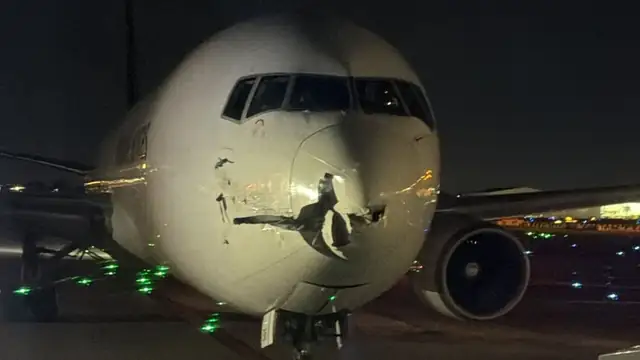
A UPS cargo jet and a Copa Airlines plane with 172 aboard collide on a Miami airport taxiway
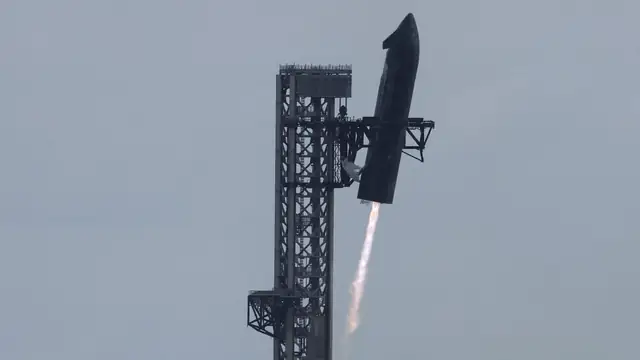
SpaceX catches its Starship spacecraft with giant tower arms for the first time after a day in orbit

Kyrie Irving scores 35 and Cooper Flagg adds 33 as the Mavericks hand the Rockets their first loss

Kevin Durant says he still has a soft spot for Oklahoma ahead of the Rockets' clash with the Thunder