US
Wisconsin physicist Francis Halzen wins Nobel Prize for catching 'ghost particles' at the South Pole
The University of Wisconsin-Madison scientist led the IceCube Neutrino Observatory, which detected high-energy neutrinos from deep space and opened a new kind of astronomy.
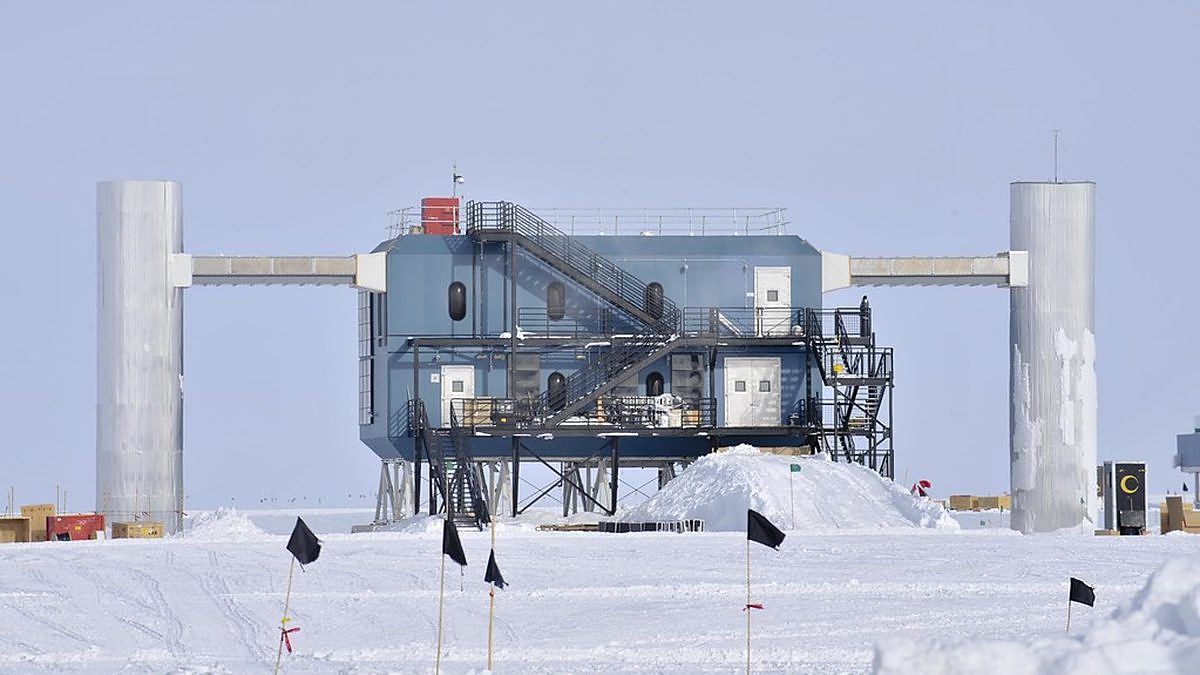
Francis Halzen, a physicist at the University of Wisconsin-Madison, won the Nobel Prize in physics on Tuesday for his work on the IceCube Neutrino Observatory and the discovery of high-energy neutrinos that originate far beyond our galaxy.
"Francis Halzen has led an international team of researchers and engineers who have provided us with a fantastic instrument," said Mark Pearce, chair of the Nobel Committee for Physics. "His tenacity and scientific vision has paved the way for a new kind of astronomy."
Halzen, 82, was born in Belgium and has long been based at UW-Madison. He said there had been predictions that he would win, but the announcement still made him feel "strange."
Hunting 'ghost particles'
Neutrinos are tiny particles with an almost unimaginably small mass. They pour out of stars like the sun, and trillions pass harmlessly through every person's body each second. Because they rarely interact with anything, scientists cannot observe them directly. Instead, they watch for the faint flashes of light produced on the rare occasions when a neutrino collides with other matter.
Halzen focused on a rare class of extremely energetic neutrinos that act as messengers from violent events in the distant cosmos, carrying clues about how the universe evolved.
A telescope made of ice
His work on capturing neutrinos at the South Pole dates to the 1980s. That idea became IceCube, a research facility in Antarctica led by the University of Wisconsin-Madison. The observatory uses a huge volume of deep, clear Antarctic ice as its detector, with thousands of sensors frozen in place to record the telltale light.
For Wisconsin, the prize is a point of pride and a reminder of the role public universities in the Midwest play in frontier science. IceCube is a collaboration of scientists and students from many countries, with Madison at its center.
The prize
The Royal Swedish Academy of Sciences announced the award in Stockholm. This year's prize is worth 12 million Swedish kronor, about $1.2 million.
Last year's physics prize went to three scientists whose work on quantum tunneling helped make possible the ultra-sensitive measurements behind MRI machines and laid groundwork for faster computers and better cellphones.
The Nobel announcements continue this week with chemistry, literature and peace, followed by economics next Monday.