US
Americans Robert Hall and Michael Woodford win the Nobel in economics for taming economic shocks
Stanford's Robert E. Hall and Columbia's Michael Woodford won the 2026 economics Nobel for models central banks use to fight inflation and recessions.
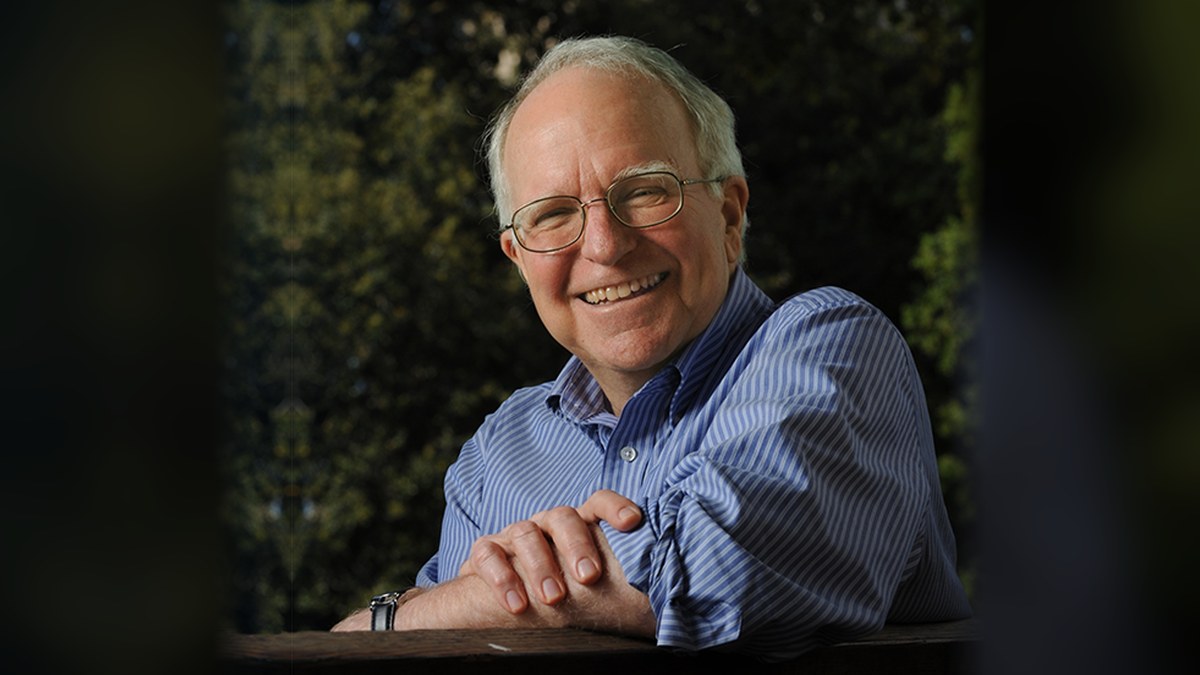
Two American economists won the 2026 Nobel Memorial Prize in economic sciences on Monday. Robert E. Hall of Stanford University and Michael Woodford of Columbia University were honored for the models that central banks and governments now lean on when inflation spikes or a recession hits.
The Royal Swedish Academy of Sciences made the announcement in Stockholm. It cited the pair for the "microeconomic foundations of macroeconomic stabilisation" and said their ideas help leaders time interest rate moves and budget choices so booms and busts are less severe.
Why their work matters
For much of the last century officials fought downturns with the playbook of British economist John Maynard Keynes: cut taxes and boost public spending to get people buying again. That recipe stumbled in the 1970s when the United States and other Western nations were hit with high inflation and high unemployment at once. Some economists decided that government efforts to steady the economy did more harm than good.
Hall and Woodford worked separately to rebuild the theory from the ground up. Rather than leaning on broad statistical ties between inflation, output and spending, their models begin with the choices of individual families and companies and then add those choices up across the whole economy.
Expectations drive spending and prices
Hall showed that households set their spending based on what they expect to earn down the road. Optimistic families spend more while worried ones pull back. A 1982 study he wrote with economist Frederic Mishkin found that roughly 80% of households spent according to those expectations while the rest lived paycheck to paycheck.
Woodford focused on businesses. His research found that firms set prices partly on where they believe costs, rival prices and interest rates are heading. That insight pushed central banks such as the Federal Reserve to spell out their thinking and plans well in advance, since public expectations can move the economy by themselves.
The prize committee said the research proved hugely valuable during the pandemic and the energy shocks of recent years. Committee chair John Hassler said the laureates gave central banks and finance ministries around the world a steady theoretical base for handling sudden jolts.
A 4:30 a.m. call and an exam to give
Woodford was asleep in New York when the call from Stockholm came at about 4:30 in the morning. He described the news as staggering and a tremendous honor. He told a prize interviewer he still had an exam to give his students that morning and joked that they were probably hoping he would call it off.
Hall, who is 83, called the award a wonderful surprise. He thanked his wife and co-author Susan Woodward, who is also an economist. He congratulated Woodford too and said his work had taught him a great deal. Hall also credited California's public schools and the University of California at Berkeley plus federally funded graduate study at MIT for his education and said he hoped taxpayers would see the prize as a fair return on their investment.
Beyond his academic work Hall chairs the National Bureau of Economic Research panel that dates the start and end of U.S. recessions. He has advised the Treasury Department and the Federal Reserve Board and co-wrote a widely discussed flat tax proposal.
The prize
The award carries 12 million Swedish kronor or about $1.2 million to be split equally between the two winners. It closed out this year's Nobel announcements and marked the second win of the season for a Stanford professor after Karl Deisseroth shared the medicine prize. The laureates will receive their honors in Stockholm on Dec. 10.
More like this
Wisconsin physicist Francis Halzen wins Nobel Prize for catching 'ghost particles' at the South Pole
Trump names White House panel to decide whether to fire Fed Gov. Lisa Cook
Victor Glover and the Artemis II crew win the nation's top spaceflight honor

Astronaut Bernard Harris Jr. to receive an XCEL Award at the Orlando summit for men of color