Communities
More than 4 million young Latinos are old enough to vote in a midterm for the first time
Over 4 million Latinos have turned 18 since 2022, making them a fast-growing group of first-time midterm voters focused on costs, immigration and family.
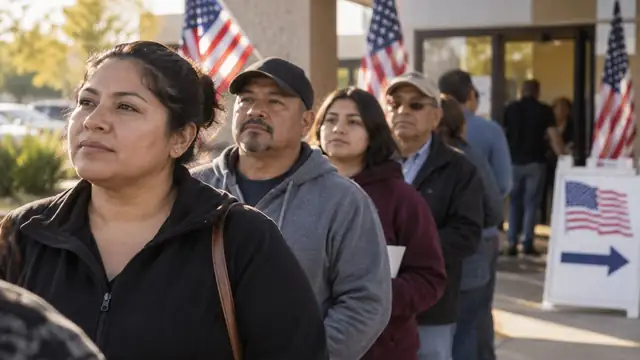
A new wave of Latino voters is about to be heard. More than 4 million Latinos have turned 18 since the last midterm election in 2022, which means the Nov. 3 vote will be the first national midterm of their adult lives. Advocates like to point out that a young Latino reaches voting age about every 30 seconds.
Add roughly 1 million newly naturalized Latino citizens and there are about 5.2 million more Latino voters eligible than four years ago. Latinos now make up about 39 million eligible voters, around 16% of the national total. Their share has nearly doubled over the past two decades.
Youth defines this electorate. The typical eligible Latino voter is 39 years old, younger than Black, Asian and white voters. Three in 10 are between 18 and 29, compared with two in 10 among all voters.
What first-time voters care about
Like their parents, young Latinos say the high cost of living tops their list. Many also feel the weight of immigration enforcement. Some are children of immigrants without legal status and have relatives or friends who have been detained. Others left school early to help support their families.
Madeline Cortez, 19, grew up in Silver Spring, Maryland, in a family with Mexican roots and now studies environmental science at the University of Wisconsin. She registered in Wisconsin because she believes her ballot carries more weight in a close state. Immigration policy and abortion rights are her top issues, shaped by seeing neighbors scramble to arrange school bus pickups when agents appeared nearby.
Voting for a better life
Juan José Estrada, 19, already mailed in his first federal ballot in California. The son of a Mexican immigrant father, he studies mechanical engineering in San Diego and dreams of becoming an architect. He says he voted to protect his rights and to build a better life, with immigration raids and the cost of living weighing most on his mind.
Christian Acosta, 21, came to the U.S. from Honduras at age 3 and became a citizen about a year and a half ago after saving roughly $900 for the application. He studies public health and political science in Baltimore while interning with a Latino civil rights group in Washington, helping spread voting information. He plans to cast his ballot by mail in Texas, where his family lives.
Acosta wants candidates to be more honest with voters and believes Latinos need more representation in Congress. Not everyone in his family votes the same way, a reminder that the Latino electorate is diverse rather than a single bloc.
What unites these new voters is an eagerness to be heard. Whichever way they lean, their numbers make them a group no campaign can afford to ignore.