
Politics
Trump calls Hakeem Jeffries smart, promises a wave of vetoes and threatens a tax on overseas data centers
Back from Asia, Trump praised his Putin and Xi ties, called Hakeem Jeffries smart, promised vetoes and threatened to tax data centers built overseas.
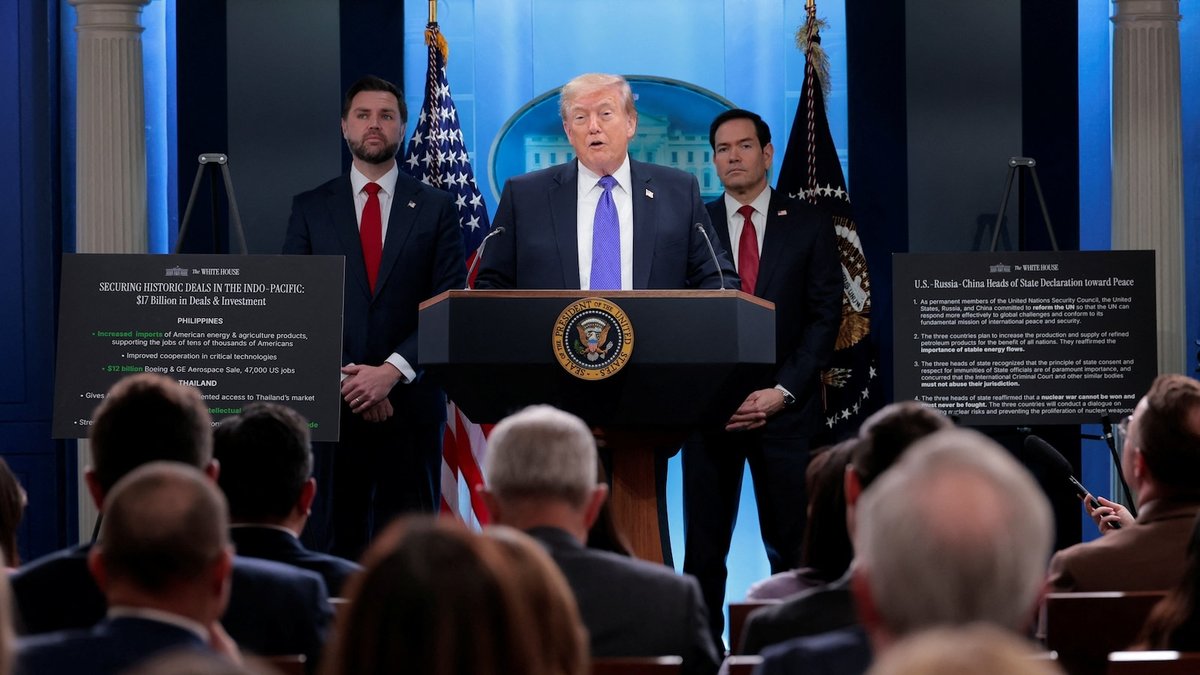
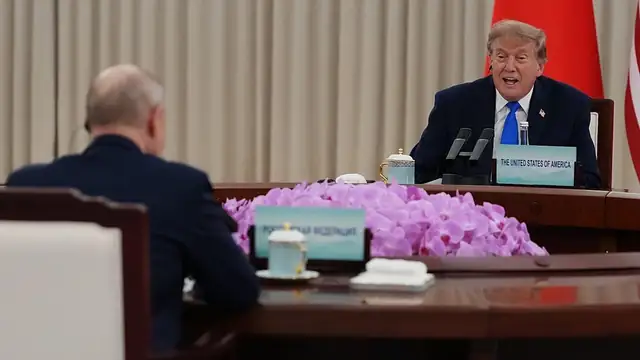
President Donald Trump came home from Asia on Thursday night and spent a long Friday afternoon in the White House briefing room calling the trip a triumph. Standing between Vice President JD Vance and Secretary of State Marco Rubio, he praised his first three-way meeting with Xi Jinping and Vladimir Putin. He also sent a surprising message to the Democrats who will soon run Congress.
Trump called incoming House Speaker Hakeem Jeffries "smart" after months of insults. He gave the same label to Senate Democratic leader Chuck Schumer. He even suggested that a Democratic Congress might be easier to deal with than some members of his own party who he said were impossible to work with.
That olive branch came with a warning. Trump said he expects Democrats to send him bills he dislikes and that he will veto them one after another. After a month or so of that, he predicted, both sides would start bargaining. He named health care and immigration as the two areas where he sees room for a deal but offered no details on either.
Friendship talk and few results
Trump said he has a "fantastic" relationship with both Putin and Xi and argued the country is safer because of it. Asked whether Putin is a friend to America, he would not say yes. He called it a very good relationship instead. He again insisted the Russian leader wants the war in Ukraine to end, even though Russian missiles and drones struck Kyiv overnight and killed eight people.
He admitted the war has been harder to stop than he expected. He described Putin and Ukrainian President Volodymyr Zelenskyy as two men who hate each other and do not know how to finish the fight. Rubio stepped to the podium to defend the summit. He said the three countries hold most of the nuclear weapons on Earth and that refusing to talk would be dangerous.
The meeting in Shenzhen produced a joint peace declaration and a promise to keep talking about nuclear risk. It did not produce any concrete breakthrough. Trump said cutting nuclear weapons is something he keeps raising but conceded it is very hard to do.
A tax threat and AI guardrails
The newest policy talk of the afternoon was about artificial intelligence. Trump said he and Xi agreed on unspecified "joint guardrails" for the technology. That is a sharp turn for a president who has argued that rules would slow American companies down. He gave no timeline or details.
He also warned tech companies against building data centers overseas. Trump said firms are free to do it but would face a "tremendous tax" if they did. He did not explain how that tax would work. He said the centers belong in the United States so the country can stay ahead of China in the AI race.
Iran, fuel prices and air traffic
Trump was asked about Vance's earlier remark that the war with Iran helped sink Republicans in the midterms. He called it accurate and pointed to higher fuel prices. Then he added that he would make the same decision again because Iran cannot be allowed to have a nuclear weapon. Vance told reporters his job is to back the president.
On air travel, a week after a rare nationwide ground stop, Trump called the air traffic control system obsolete but insisted it is still safe. He is asking Congress for about $50 billion to rebuild it. He also touted new trade agreements with Thailand and the Philippines.
More like this
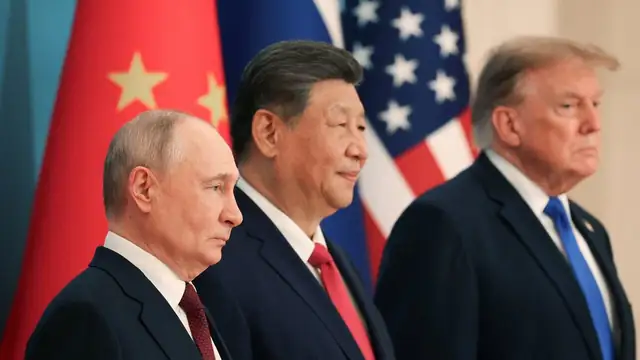
Trump, Xi and Putin issue a joint peace declaration after their first three-way summit
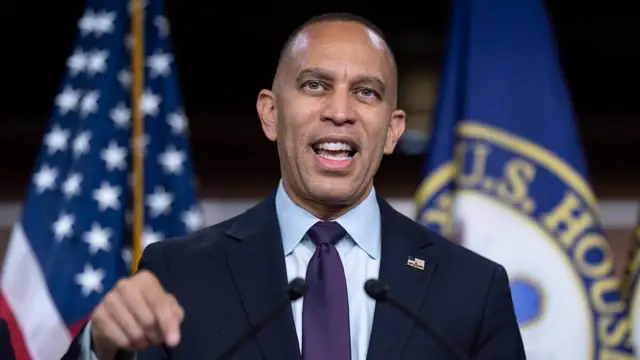
House Democrats nominate Hakeem Jeffries 251-11 as he nears history as the first Black speaker
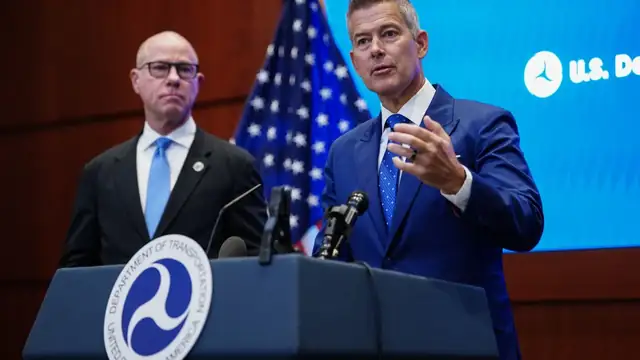
A botched wiring upgrade set off the nationwide ground stop as airlines scrap another 6,000 flights Saturday
Trump calls Europe's Ukraine summit from Air Force One, says Putin wants peace and questions billions in aid