Politics
Medicare for All support hits a 10-year high, and Michigan's Senate race is its biggest test
A KFF poll finds two-thirds of Americans favor expanding Medicare. In Michigan, Democrat Abdul El-Sayed has made it the center of his campaign against Republican Mike Rogers.
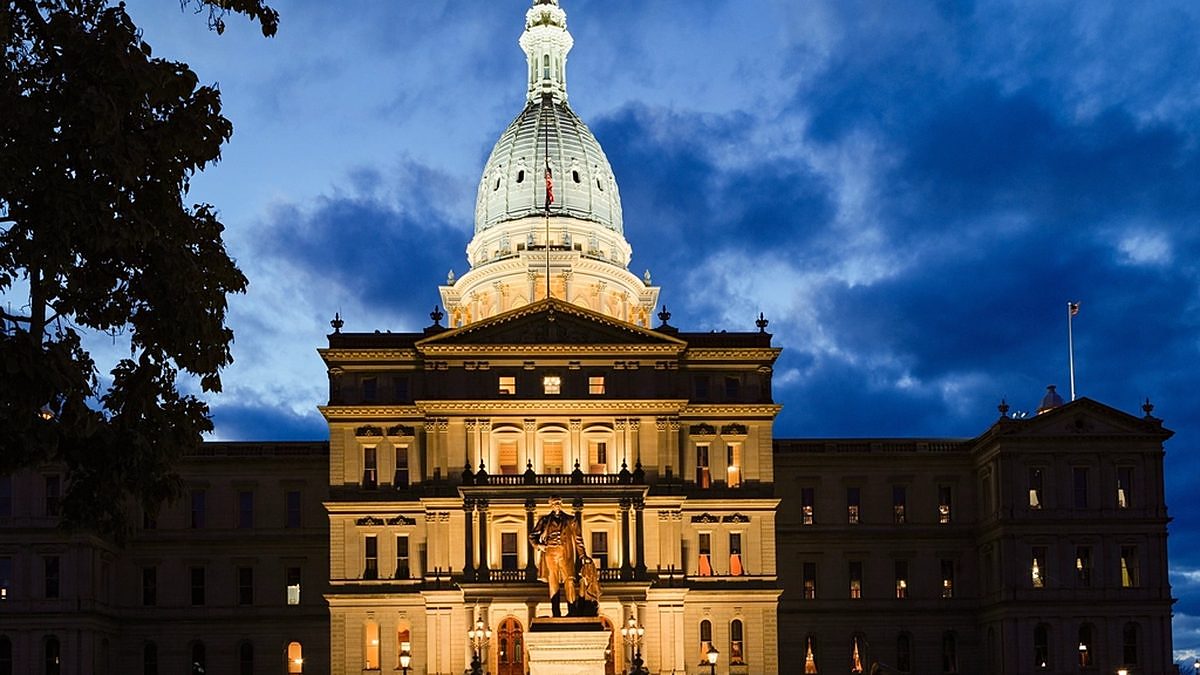
Christina Starks-Clay was standing in a line that stretched for blocks through downtown Lansing, Mich., when she pulled out her phone to show a screenshot: a $1,000 cashier's check she had just picked up to pay down her son's dental bills. Even with good dental insurance, she still owed $389. Her own cleaning weeks earlier had cost $600.
"A lot of people couldn't do what I had to do today," said Starks-Clay, an early childhood special education paraprofessional. "So I need to hear, how are you going to make this better for everyone?"
She had come to a Sept. 11 town hall for Abdul El-Sayed, the Democratic Senate nominee in Michigan, whose rallying cry the crowd chanted by heart: "Money out of politics! Money in your pocket! Medicare for All!"
A poll high
Support for Medicare for All is at its highest in at least a decade, according to a new KFF poll, with two-thirds of Americans favoring an expansion of the government health program. But pollsters say many people are unsure what the term means, and support shifts depending on what they are told about it. Traditionally it has meant a single federal insurance program that guarantees coverage and largely replaces private insurance.
"Too many people don't have health insurance, too many people who do have insurance can't afford medical care, and many people are terrified about the costs of being sick," said Jonathan Oberlander, who studies health politics at the University of North Carolina at Chapel Hill. "In an electorate that wants change ... Medicare for All is an important symbol."
Michigan at the center
Democratic Senate candidates in Maine, Minnesota and Florida have embraced the idea, but nowhere is it as central as in Michigan. El-Sayed, a physician and Detroit's former top public health official, has campaigned on it since his 2018 run for governor. An Egyptian American, he would be one of the most prominent Arab American and Muslim elected officials in the country if he wins.
Ashley Kirzinger of KFF said voters want a concrete plan to lower costs. "When we ask people what do they want to hear from candidates in regards to healthcare, it's a plan to bring down healthcare costs," she said.
The Republican case
His opponent, Republican Mike Rogers, a former Michigan congressman, recently released a brief health care plan and argues a government takeover would come at someone else's expense. "[If] the government's going to give you something, they have to take it away from someone else," Rogers said.
Analysts note that, even with a Democratic Senate, passing Medicare for All would face opposition from Republicans, many moderate Democrats and the health care industry. For voters like Starks-Clay, though, the message is less about legislative odds than about whether someone is fighting for families buried in medical bills.