US
Amelia Earhart search comes up empty as the lagoon object turns out to be a pile of trees
A 17-member team reached remote Nikumaroro to check a shape seen in satellite photos. It found washed-up trees, not the famed aviator's lost plane.
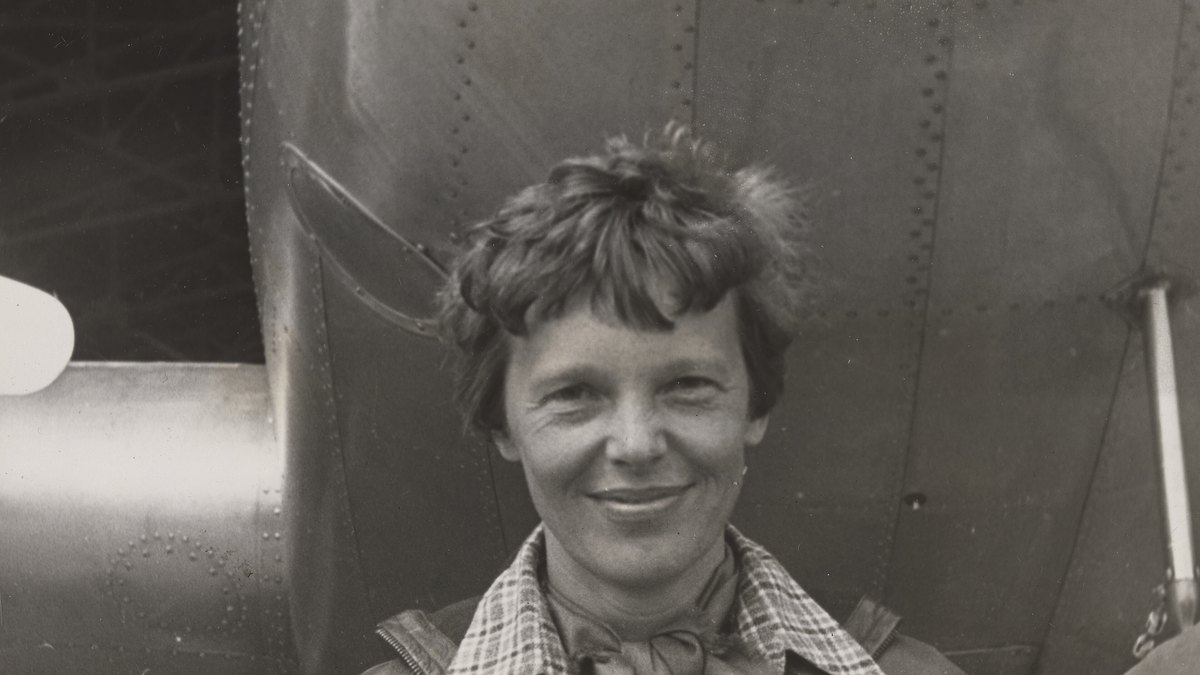
The newest attempt to solve the mystery of Amelia Earhart's disappearance has ended without the answer its leaders hoped for. A research team that sailed to a remote Pacific atoll said the shape it went to inspect was not her plane after all. It was a tangle of large trees washed up on a sandspit.
What the team found
The 17-member expedition was led by archaeologist Rick Pettigrew of the Oregon-based Archaeological Legacy Institute and Steve Schultz, general counsel at Purdue University. Its target was the Taraia Object, a blur in a lagoon off Nikumaroro that a Navy veteran spotted in satellite images in 2020. The object shows up in aerial photos as far back as 1938 but nobody had noticed it before then.
By the time the researchers arrived much of the debris had broken apart and drifted off, leaving a single Y-shaped piece. A shiny crust of coral sand and carbonate explained the glint that had made the object look like metal. Other pieces nearby wore the same glossy coating.
Bad weather kept the crew aboard its ship for three of the five days it had set aside for the site. Limited fuel and supplies meant the trip could not be stretched. The team still swept the lagoon with a magnetometer, a tool that senses iron. Sonar let them peer under the sediment on the lagoon floor.
The castaway theory lives on
Pettigrew said the group met its main goal of testing the idea. He still believes Earhart and her navigator, Fred Noonan, most likely ended up on Nikumaroro. Schultz said ruling out one object does not weaken the wider case that the pair landed there as castaways.
Not everyone is convinced. A retired Smithsonian curator who studies Earhart noted that the island has been searched more than 15 times without turning up real evidence of the plane or its crew. The huge government search in 1937 concluded that the Electra ran out of fuel and went down in the ocean near its destination.
Earhart and Noonan vanished on July 2, 1937, after leaving Lae, New Guinea, for Howland Island on her bid to become the first woman to fly around the world. She had about 22,000 miles behind her and roughly 7,000 still to go. Nikumaroro, now part of Kiribati, sits about 400 miles southeast of Howland.
More searches ahead
Other hunts have also fallen short. A plane-like sonar image near Howland in 2024 turned out to be rocks, while a 2019 trip to Nikumaroro also came home empty-handed. A deep-sea exploration company is now trying to raise $8 million to $10 million for another sweep of the waters around Howland.
Purdue's research foundation paid for the Electra in the 1930s and Earhart had planned to return the plane to the school when her flight was done. Pettigrew said the courage and curiosity that drove her also drove every step of this search.
More like this
America's oldest natural history museum closes its doors just short of its 200th birthday

Astronaut Bernard Harris Jr. to receive an XCEL Award at the Orlando summit for men of color

Henrietta Lacks is remembered 75 years after her death as her grandson presses Johns Hopkins on the estate's role
SpaceX Dragon docks at the space station with science gear and the last roll-out solar arrays