
Communities
Ta-Nehisi Coates says Stacey Abrams 'didn't get to wear the crown'
Ta-Nehisi Coates told a Rutgers audience that Stacey Abrams predicted Georgia would turn blue in 2015 and did the organizing work without becoming governor.
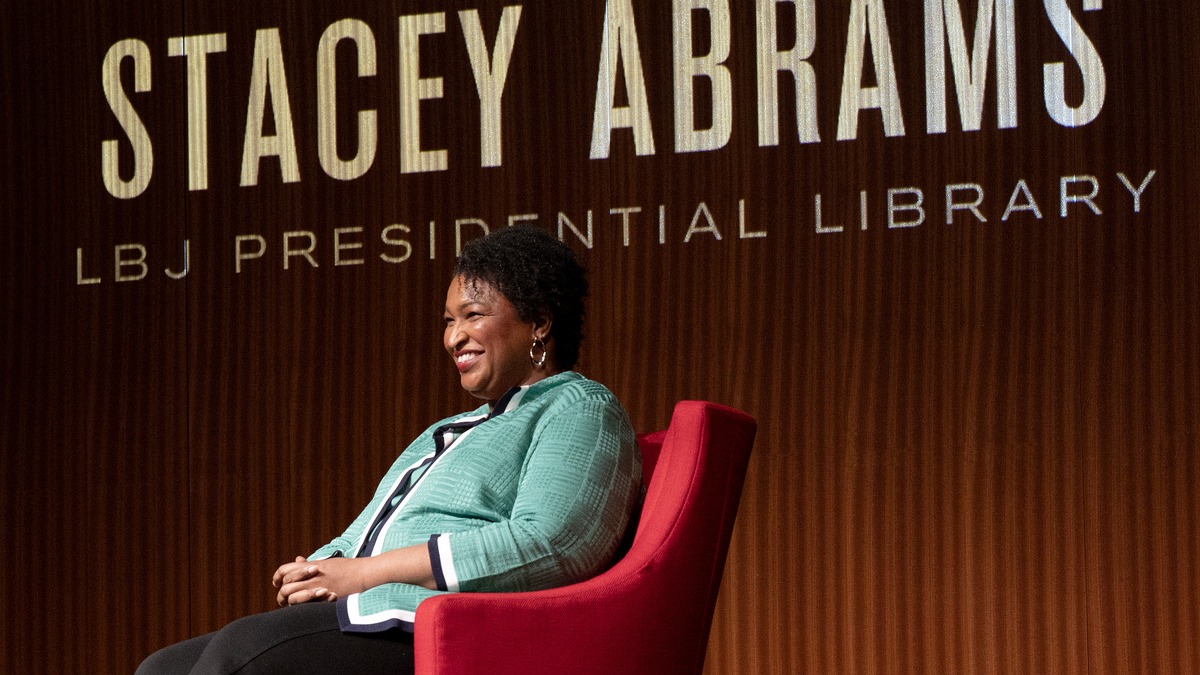
Ta-Nehisi Coates told a university audience that Stacey Abrams saw a path to turn Georgia blue more than a decade ago and then did the organizing that helped make it real. He said she never got to claim the prize herself.
He spoke on Nov. 4, the night after Americans voted in the midterms, at Rutgers University-Newark. The program was titled "Where Do We Go From Here? A Conversation with Ta-Nehisi Coates on Race and American Democracy." It was put on by the Sheila Y. Oliver Center for Politics and Race in America and moderated by the center's director, Rutgers professor James Jones.
Coates said the exchange happened backstage in 2015, shortly after he published "Between the World and Me," the memoir that won him the National Book Award. She was Georgia's House minority leader then and was about to moderate a talk with him.
A prediction he did not quite believe
Abrams told him she thought the long-Republican state could flip. Coates said he did not share her confidence then, even if he grasped how much the belief mattered to her.
"I didn't laugh in her face. I didn't do that. I wasn't that disrespectful," he told the crowd. "But I was like, 'Really, you think so?' It's an interesting idea."
To him, the memory showed how much stubborn hope it takes to redraw a political map, especially when the organizers who lead that fight never themselves hold the top job.
"Somebody had to believe that. And somebody had to do the organizing work. But she didn't get to wear the crown," he said, drawing a burst of applause.
The groundwork Abrams laid
Abrams spent years registering voters and building grassroots networks that many analysts say made Democrats competitive in Georgia. She fell short in her own races for governor in 2018 and 2022. Georgia still supported Joe Biden for president in 2020 and Democrats later won a pair of Senate runoff elections there.
He suggested that same foundation helped unlock later changes in how the state votes.
Feel the joy and then get back to work
Coates made clear that even admired figures such as former President Barack Obama can be criticized. He still warned against dismissing what a hard-won election can mean to the communities that fought for it.
As an example he recalled Jesse Jackson weeping when Obama won the presidency in 2008, a snapshot of generations of struggle packed into one night.
He asked listeners to honor the people who paved the way and those still in the fight. People should respect that work enough to celebrate and then get up the next morning and keep at it, he said.
More like this
Obama tells donors Senate races are on the razor's edge as he steps up midterm campaigning
Keisha Lance Bottoms is one win away from becoming the first Black woman elected governor
Obama will rally with Ossoff and Bottoms in Atlanta on Oct. 28 as Georgia's early vote nears its end
Obama rallies Detroit for El-Sayed and Benson as Michigan early voting opens