Communities
Philadelphia launches Las Huellas, a footprint trail honoring 11 Latino changemakers
Colorful footprints at restaurants, museums and neighborhood landmarks let visitors scan a code and hear the stories of Hispanic and Latino Philadelphians.
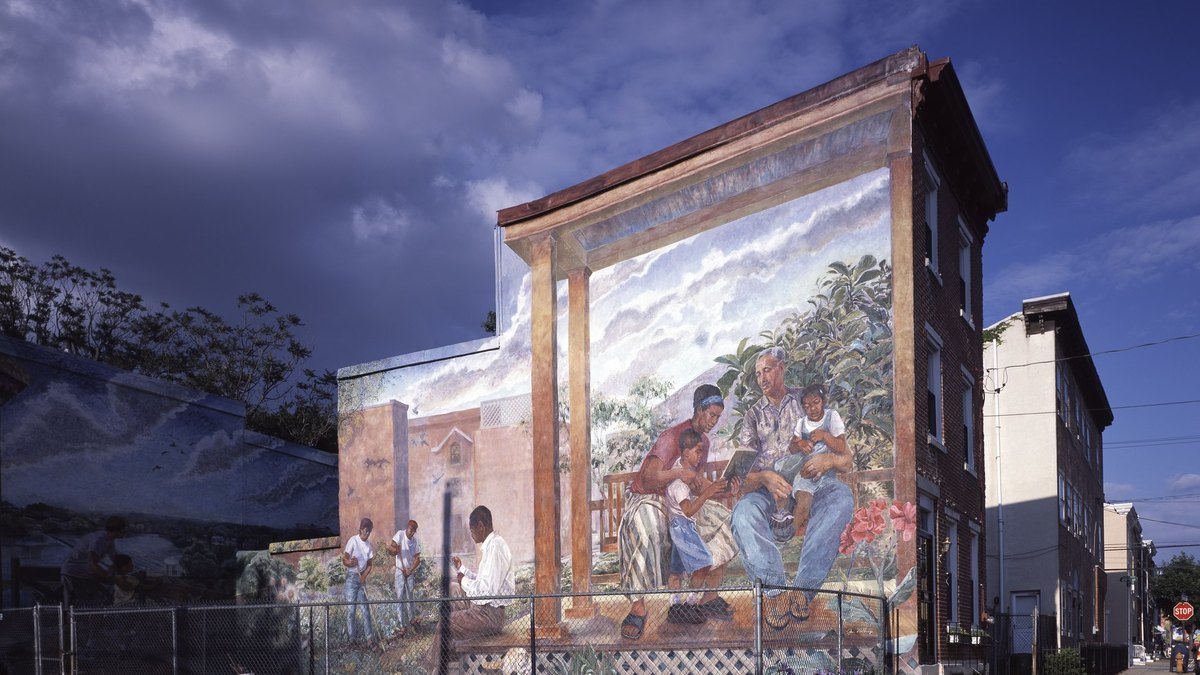
Philadelphia has a new way to learn about the Hispanic and Latino people who helped build the city. A trail called Las Huellas, Spanish for "the footprints," opened Monday with 11 footprint-shaped installations at landmarks and neighborhood favorites across town.
Each footprint has a QR code. Scan it and you hear the story of the changemaker tied to that spot, in English or Spanish. Some of the people featured recorded their own voices for the audio. The trail runs through Nov. 19.
Who is on the trail
The list mixes chefs, artists, advocates and civic leaders, past and present. Cristina Martinez of South Philly Barbacoa, who brought slow-cooked Mexican barbacoa to a worldwide audience, has a footprint outside her restaurant. Iron Chef José Garces has one at Amada in Old City. Sofia Deleon, who introduced many Philadelphians to Central American street food at El Merkury, is marked at Reading Terminal Market.
Muralist Diego Rivera is honored at the Mural Arts Philadelphia headquarters. Dr. Carmen Febo San Miguel, who led Taller Puertorriqueño for decades, is marked at that arts center in North Philadelphia. Jesse Bermudez, founder of the city's Latin American musicians association, is honored at the Painted Bride Art Center.
Others come from science, law and neighborhood work. Dr. Carlos Martínez Rivera, who helped protect a Caribbean frog species from extinction, has a footprint at The Franklin Institute. Judge Nelson Díaz, whose court opinion helped reshape federal housing policy, is honored at Dilworth Park alongside Enerolina Melendez, a longtime voice for bodega owners. Iris Brown and Tomasita Romero, who with Grupo Motivos created community spaces where children and neighbors could gather, are marked at Las Parcelas. The Rev. Luis Cortés Jr., who founded Esperanza in Hunting Park in 1986, rounds out the list.
There is also a bonus online story about Luis "Lou" Castro, who became Major League Baseball's first Hispanic player in 1902. His ballpark no longer stands, so his story lives on the web instead of on a sidewalk.
Footprints as a mark left behind
Organizers said they picked footprints because they stand for the mark a person leaves. The artwork comes from three Philadelphia artists: Cindy Lozito, Manuela Guillén and Fabiola Lara.
"People walk past these places every day without realizing the history behind them," said Jennifer Rodriguez, president of the Greater Philadelphia Hispanic Chamber of Commerce and one of the voices on the tour.
The trail is part of a series tied to the nation's 250th anniversary that highlights communities whose work shaped the city. It invites people to walk the neighborhoods, stop at a footprint and meet someone they may never have heard of.
More like this

Spanish-language radio in Pennsylvania fills with Latino voters' cost-of-living fury
San Antonio's Woodlawn Lake Día de los Muertos festival is canceled over immigration enforcement worries
Día de los Muertos altars and celebrations open across the country from San Diego to New York
Hispanic Heritage Awards honor the people of Minnesota for protecting their neighbors