US
Former CIA official pleads guilty in scheme that netted gold bars and Florida mansions
David Rush admitted to wire fraud after prosecutors say he invented secret programs to divert federal money, costing taxpayers about $194 million. Sentencing is set for Jan. 28.
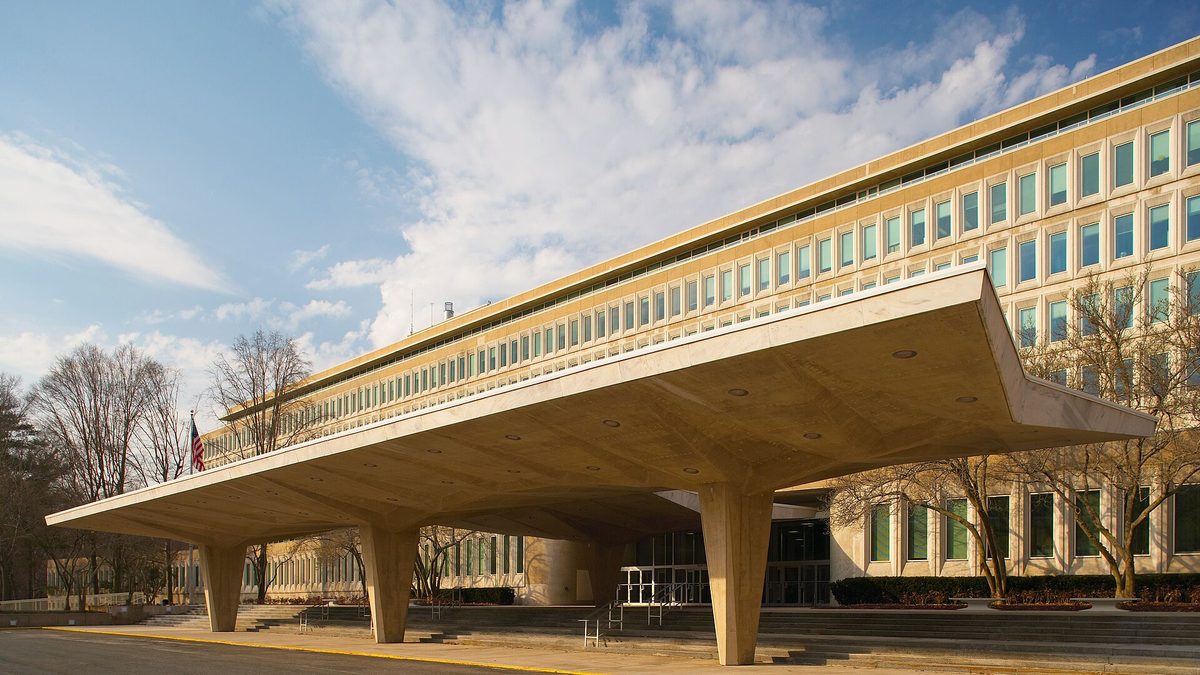
A former senior CIA official pleaded guilty Tuesday to wire fraud after federal prosecutors said he used fake classified programs to divert government money into hundreds of gold bars and luxury Florida real estate.
David J. Rush, 49, of Ashburn, Virginia, entered the plea in federal court in Alexandria. The single count carries a maximum of 20 years in prison. U.S. District Judge Michael Nachmanoff scheduled sentencing for Jan. 28.
Invented programs, real money
According to court filings, Rush fabricated a "highly classified" government program to justify buying luxury properties in South Florida that he planned to resell for personal profit. Separately, he concocted a bogus "sensitive government activity" to obtain gold. Prosecutors say he lied to colleagues and contractors about his military and academic credentials and falsely claimed the programs had been authorized by senior officials.
In one episode described in the latest filing, Rush tried to authorize the release of $100 million from a government contract. He then directed someone to move about $145 million to a holding company he had set up, and used the money to buy four luxury properties in Palm Beach and Hobe Sound.
The Justice Department puts the government's total losses at roughly $194 million. That includes more than $1.8 million in private charter flights he approved for his own use.
A search that turned up 300 gold bars
Investigators who searched Rush's Virginia home seized about 300 gold bars, roughly $2 million in cash and about 35 luxury watches, according to an FBI affidavit. Earlier filings estimated the gold was worth around $46 million. Prosecutors also accused him of falsely claiming tens of thousands of dollars in military leave pay after his honorable discharge from the Navy in 2015.
A judge ordered him held without bond after his arrest earlier this year.
A resume that didn't hold up
Investigators say Rush's credentials were largely invented. He claimed to be a former Navy pilot with a bachelor's degree from Clemson University and a master's from Rensselaer Polytechnic Institute. According to the FBI, he never flew for the Navy and attended neither school. He enlisted in 1997 and left the Navy Reserve as a lieutenant in 2015.
At a June hearing, defense attorney Jessica Carmichael called the gold "basically a nonissue," saying Rush obtained the bars properly, kept them in a basement safe and "never claimed they were his." She declined to comment after Tuesday's plea.
A security breach, too
The newest filing also contains a troubling admission. Under questioning, Rush acknowledged that he gave a foreign government official information identifying a secret source for the U.S. government. The filing does not name the country involved.
CIA Director John Ratcliffe said the agency referred the case to the FBI immediately after an internal investigation uncovered evidence of wrongdoing. "David Rush abused his position and betrayed the public trust and should be held fully accountable for his actions," Ratcliffe said.
Attorney General Todd Blanche said in a statement that "federal employees are entrusted with serving the American people, not themselves."
Questions for oversight
The case is likely to renew questions about how classified spending is policed. Secret programs, by design, receive limited outside review, and investigators say Rush exploited exactly that: colleagues and contractors deferred to directions that appeared to carry the weight of high-level authorization.
The scale of the losses, nearly $200 million, makes it one of the more striking insider fraud cases involving the intelligence community in recent memory. What happens to the seized gold, cash, watches and Florida properties will be addressed as the case moves toward sentencing in January.